

Typography Trends 2026 – What Shapes Modern Type
Typography is no longer just about readability. It defines how brands speak.
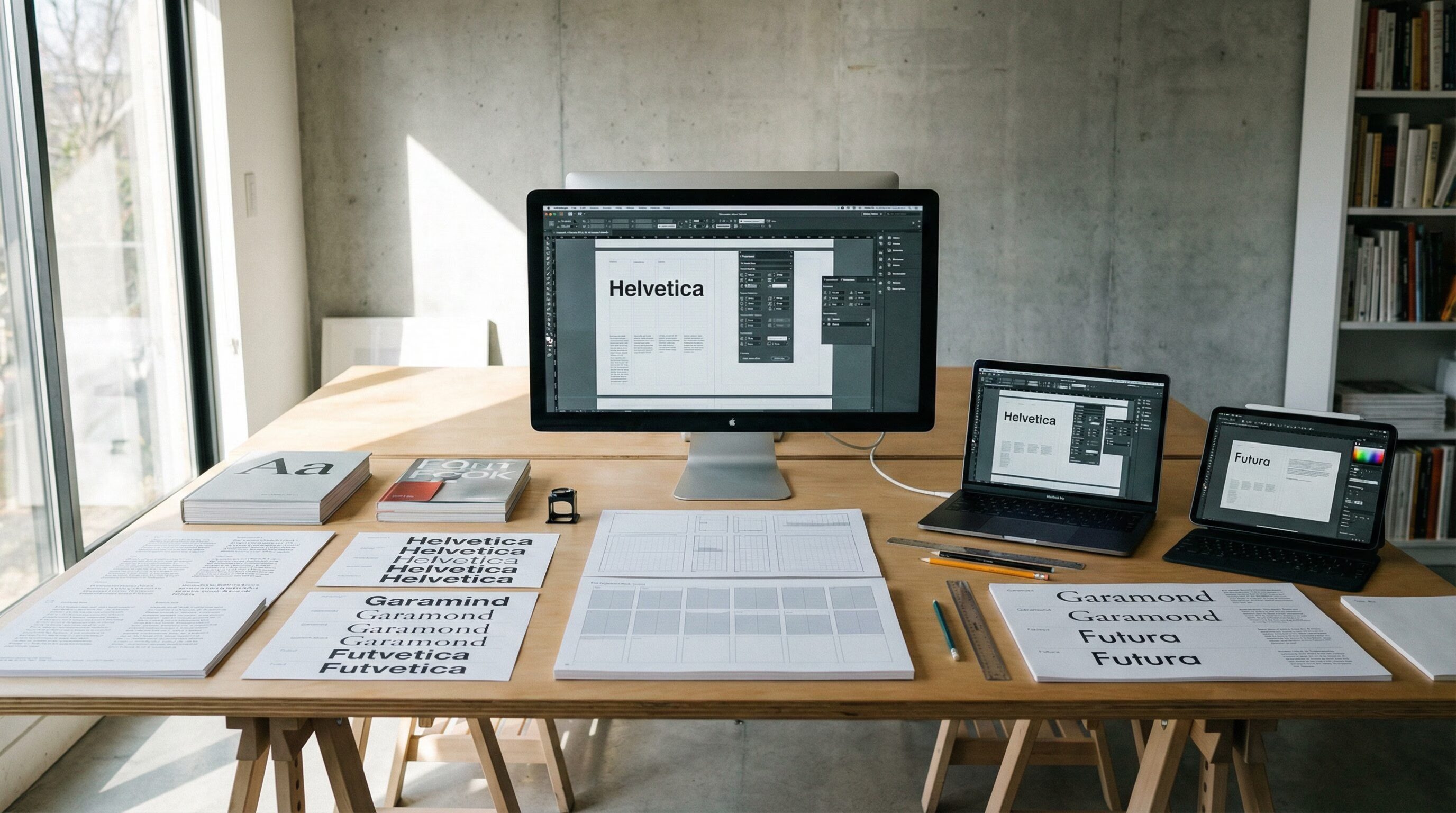
Typography is no longer just about readability. It defines how brands speak.
Typography has always been about clarity. But in 2026, it goes further. Type becomes a central element of brand identity and emotional communication.
Fonts are no longer neutral carriers of information. They actively shape perception, tone, and personality.
Typography becomes voice.
Strong, expressive typography continues to dominate. Brands use bold type to create immediate impact and clear positioning.
This trend is characterized by:
Large-scale headlines
High contrast typography
Strong visual hierarchy
Confident, minimal messaging
Typography becomes the main visual element, not just a supporting one.
With increasing digital complexity, typography needs to adapt. Variable fonts allow flexible design across devices and contexts.
In 2026, adaptive typography enables:
Responsive type systems
Performance optimization
Consistent brand expression
Dynamic visual behavior
Type becomes part of the system — not just a fixed asset.
While digital precision dominates, there is a growing desire for human character. Slight imperfections, irregularities, and organic details add authenticity.
Brands use these elements to feel more approachable and less mechanical.
Perfection is replaced by personality.
Despite expressive trends, clarity remains essential. Typography must perform across screens, formats, and environments.
This leads to:
Readable type systems
Clear hierarchy
Reduced visual noise
Efficient communication
If you’ve read Typography That Matters – Visual Hierarchy & Type in Brand Design, you know that structure is key to readability.
More brands rely on typography as their primary visual element. Instead of complex logos, they use strong typographic systems to create recognition.
Typography becomes the core of identity — not just one element among many.
If you want to create a brand that communicates clearly and stands out through typography, let’s design a system that gives your brand a strong voice.
Because how you say something matters as much as what you say.